The Art of Living Together
The Art of Living Together emerged from my fascination with the ways in which different forms of life are living together. During my travels through Angola and South Africa, I became interested in symbiosis and the intricate relationships that allow different species to coexist, adapt, and evolve. What started as an exploration of nature gradually unfolded into a reflection on how difference, connection, and interdependence shape life itself.
Looking closely at the natural world revealed that life does not flourish through sameness, but through the meeting of distinct qualities and ways of being. This observation led to an exploration of seemingly opposing forces: the geometric and the organic, the abstract and the detailed, the digital and the tactile, the East and the West, the North and the South, the old and the new, the art and the design. I am fascinated by the tensions that arise when these ostensibly different worlds meet, influence, and transform one another, and eventually find balance. My artistic process reflects this same idea. By bringing together contrasting elements, materials, and visual languages, I created a series in which separate parts become connected within a larger whole, allowing all to collide, merge, and reinforce one another.
The Art of Living Together invites us to look beyond boundaries and recognise the many types of relationships within nature. Coexistence is not about becoming the same, but about discovering how our differences can support and transform one another. When this fragile reciprocity is found, seemingly separate worlds can come together and evolve into something greater.
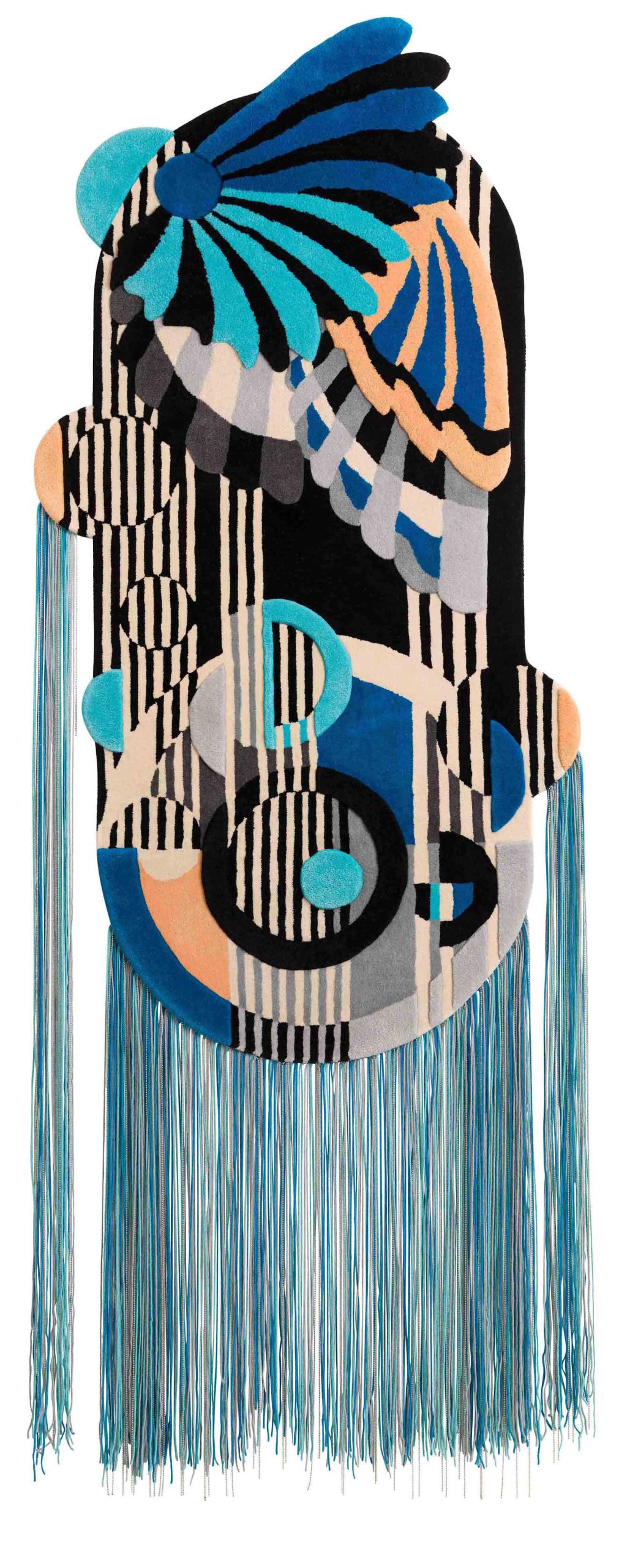
Zebra & Ostrich
In the African desert, sensitivity is an essential tool for survival and protection. Ostriches have exceptional eyesight, while zebras have stronger hearing and a more developed sense of smell. Alone, each animal perceives only part of its surroundings. Together, their different sensitivities create a more complete awareness of the world around them, allowing them to warn each other of lurking predators.
This way of looking at nature made me reflect on my own heightened sensitivity. Perhaps this human trait does not need to be corrected anymore, simply because it differs from what is considered typical. It can offer another way of navigating the world—one that notices things that might otherwise remain unseen or unheard.
Zebra & Ostrich challenges us to shift our perspective and reconsider our current sense of normality. It questions the boundaries we use to make sense of the world. What appears clearly defined may be far more complex than it first seems, and what was once seen as a limitation can reveal itself as an essential ability.
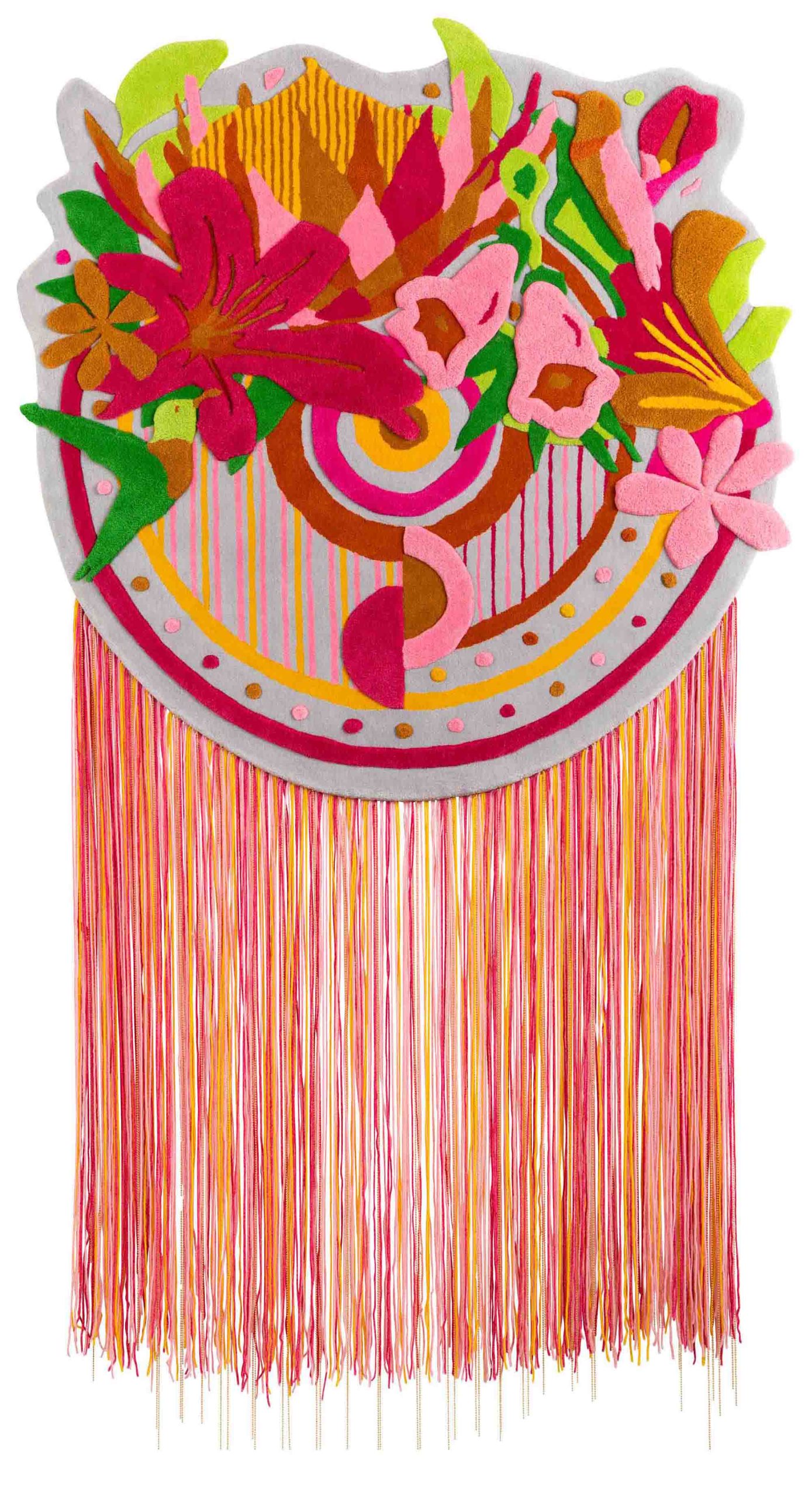
Sunbirds & Tropical Flowers 1.0
Sunbirds and tropical flowers have developed a remarkable relationship. Many tropical flowers have adapted their shape and size to the beaks of local sunbirds, offering them access to their nectar. In return, the birds feed on insects that visit the plants, helping to protect the fragile flowers from parasites in order to flourish.
This exclusive relationship made me realise that sensitivity is not simply fragility. Like a flower, it can be a way of experiencing the world with depth and richness. Given the right conditions and nourishment, sensibility can become extraordinarily alive.
Sunbirds & Tropical Flowers suggests another, more natural way of living together: through attentiveness, protection, and reciprocity. Each species, including humans, has something the other needs. What allows one to flourish can also contribute to the evolution and survival of the other.
THE WORLD NEEDS MORE FLOWERS AND BIRDS
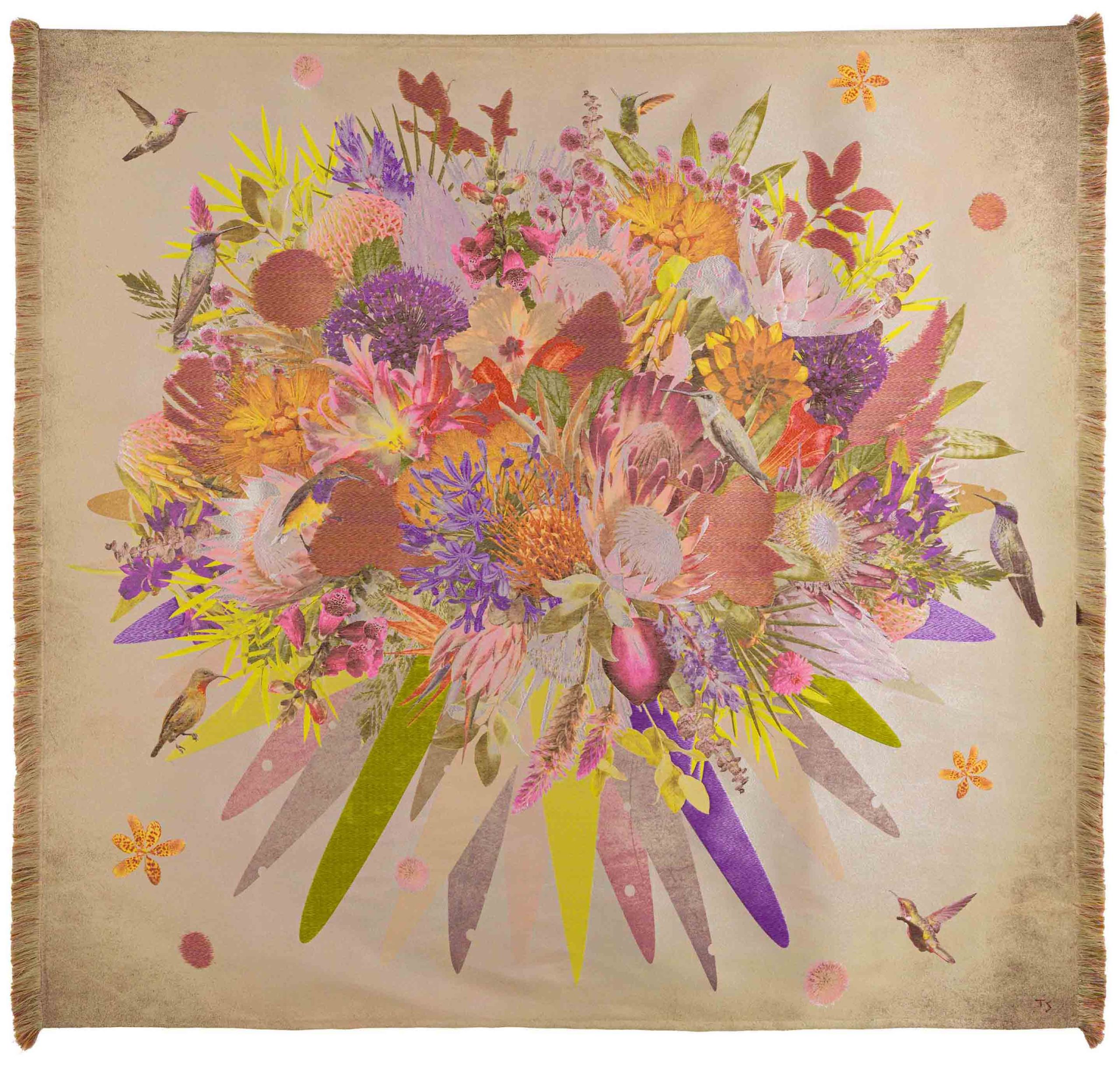
Sunbirds & Tropical Flowers 2.0
(Suikerbekkies & Suikerbossies)
Sunbirds and tropical flowers have developed a remarkable relationship. Many tropical flowers have adapted their shape and size to the beaks of local sunbirds, offering them access to their nectar. In return, the birds feed on insects that visit the plants, helping to protect the fragile flowers from parasites in order to flourish.
This exclusive relationship made me realise that sensitivity is not simply fragility. Like a flower, it can be a way of experiencing the world with depth and richness. Given the right conditions and nourishment, sensibility can become extraordinarily alive.
Sunbirds & Tropical Flowers suggests another, more natural way of living together: through attentiveness, protection, and reciprocity. Each species, including humans, has something the other needs. What allows one to flourish can also contribute to the evolution and survival of the other.
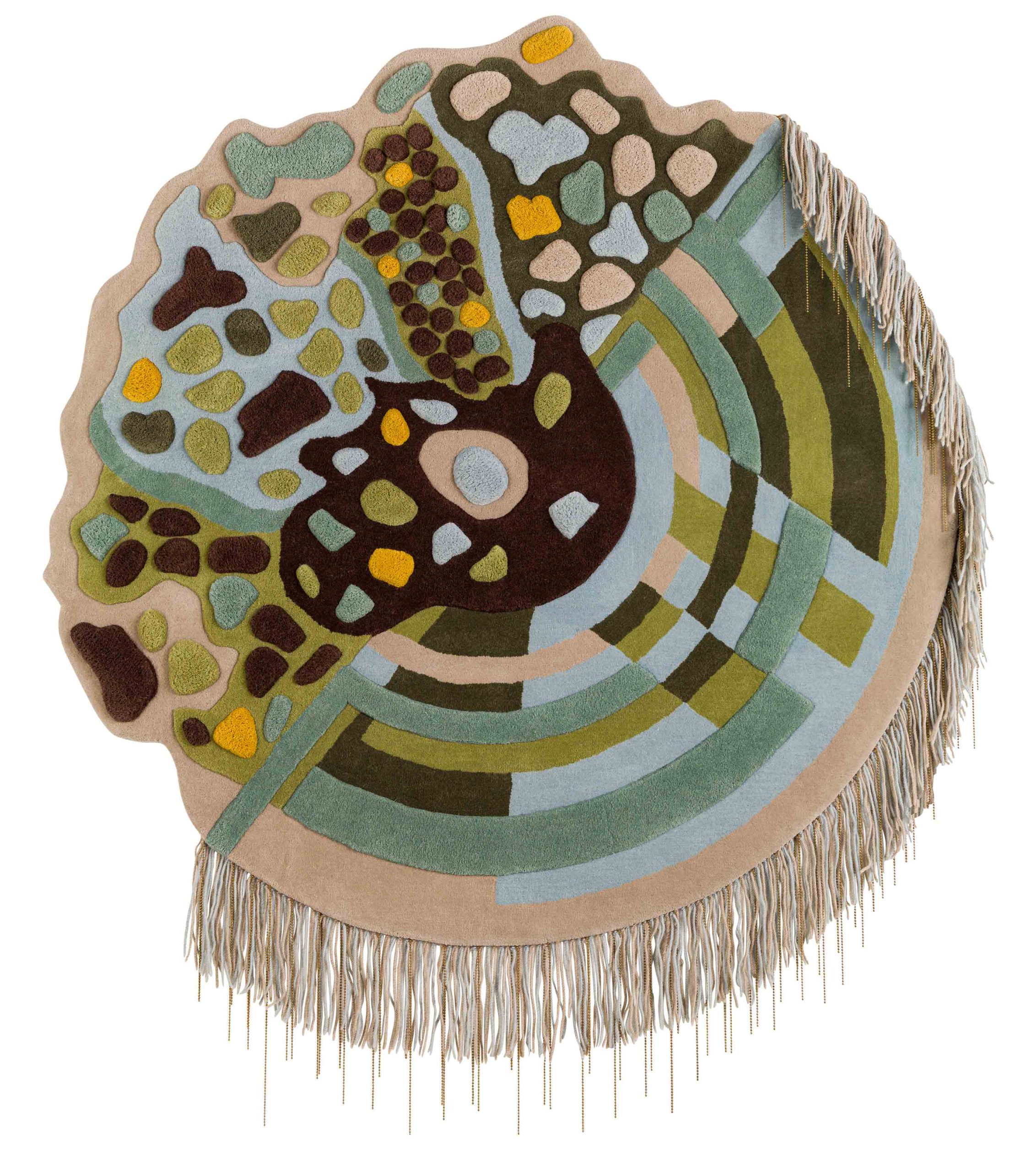
Chameleon & Lichen
The chameleon is remarkably skilled at adapting its appearance to its surroundings. Lichen, with its intricate textures and colours, resembles the chameleon’s skin, creating a natural background for the chameleon to blend in effortlessly. By mirroring the layers and textures of lichen, the chameleon becomes less noticeable to predators and prey, while the lichen itself remains unaffected.
Like a chameleon, adapting myself to my surroundings has long been my way of moving through the world: observing what was expected, adjusting my behaviour, and blending in. This form of camouflage can offer protection, a way to feel more safe and accepted. But when it becomes habitual, it can also distance us from our own needs and identity.
Chameleon & Lichen reflects on this double nature, where survival through adaptation can become a form of disappearance. The challenge is learning when to blend in, and when to be seen.
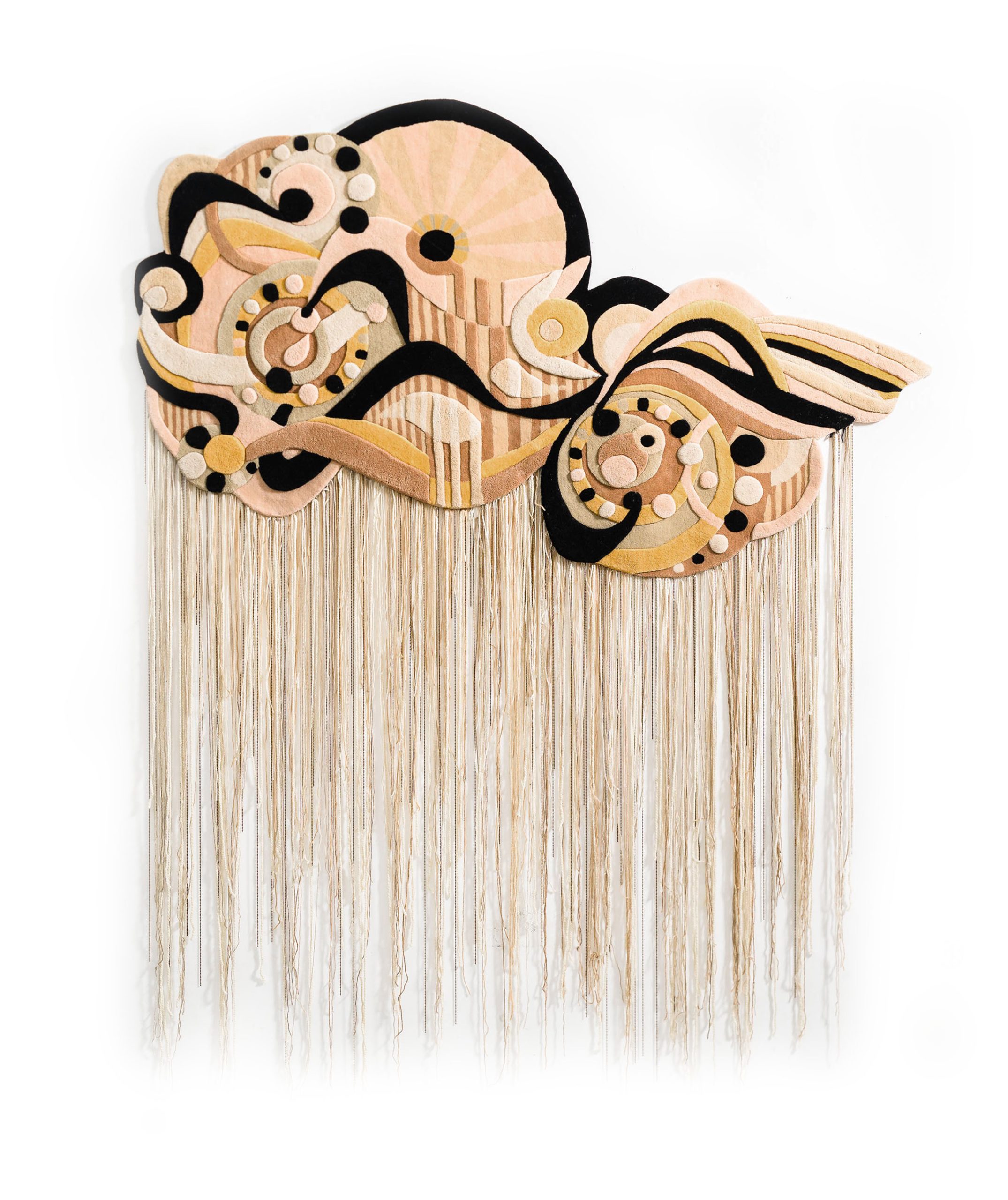
Welwitschia
(push-me-pull-you)
The Welwitschia plant grows in the Namib Desert, one of the harshest environments on Earth. Its relationship with the Welwitschia bug reveals a complex interplay of dependence, protection, and risk. These bugs are often found in pairs, moving in a subtle push-and-pull dynamic. They feed on the sap of the Welwitschia, finding protection among its leaves while also pollinating the plant. Yet, they can carry a fungus that may hinder the development of healthy seeds, revealing the ambivalent nature of their relationship.
The same delicate entanglement exists within me, where two very different ways of experiencing and understanding the world have shaped my life—forces that constantly interact, each capable of amplifying, compensating for, or concealing the other.
Welwitschia explores the ways opposites can support one another while also obscuring what lies beneath. Perhaps it is not about separating these forces, but learning to recognise their relationship—and discovering when the push-and-pull allows us to grow.
About the making process: from digital to tactile
For Zebra & Ostrich and alike I digitally transformed my abstract drawings into 3D reliefs and textile structures by implementing ancestral tufting techniques. These tapestries are handmade by artisans in India with the utmost care. New Zealand wool of the highest quality is used to create durable yet soft results, while the yarns are coloured using natural, chemical-free ingredients. Last but not least, I added a touch of sparkle by incorporating metal chains.
For Sunbirds & Tropical Flowers 2.0, I selected around 200 images and then cut out, recoloured, adjusted, and merged elements from these images to create the bursting composition. I then translated the complex, multilayered digital artwork into Jacquard fabric by implementing various weaving techniques, while taking into consideration that the weaving method is built up from only eight colours. The yarns are made from pure new wool, (mercerised) cotton, and NewLife® polyester, and the Jacquard is produced within a sustainable textile production process. For the optional version, I added further 3D effects and a touch of sparkle through hand embroidery and beading.
Sunbirds & Tropical Flowers 2.0 contains (parts of) images made by: Dave Newbould – Agata Create – Anindhya Sundar – Anna Christien Piebenga (my mom) – Ansie Potgieter – Bannon Morrissy – Bradley Howington – Chris – Charles – Colin Watts – David Clode – Elizabeth Explores – Ian McKenzie Vincent – James Wainscoat – Jannet Serhan – Jeff Kingma – Kara Eads – Michael Dziedzic – Natalie Sedova – Nik Jeromel -Larisa Lofitskaya – Thanate Rooprasert – maratr – Carol Behan – Tjitske Storm – Madhu Shesharam – Teddy – National Guard of the United States – Benjamas – Kiaoracmguth – Trudith – Josch – Momentmal – Bryan Hanson – Heidi Simpson – Fragis – Cor Gaasbeek – Freddie – Marisa – Michael Roth – Jean vd Meulen – many unknown global artists from the open-source platforms Rawpixel and Unsplash. Thanks to all these generous people! And thanks to nature, the main source of all.
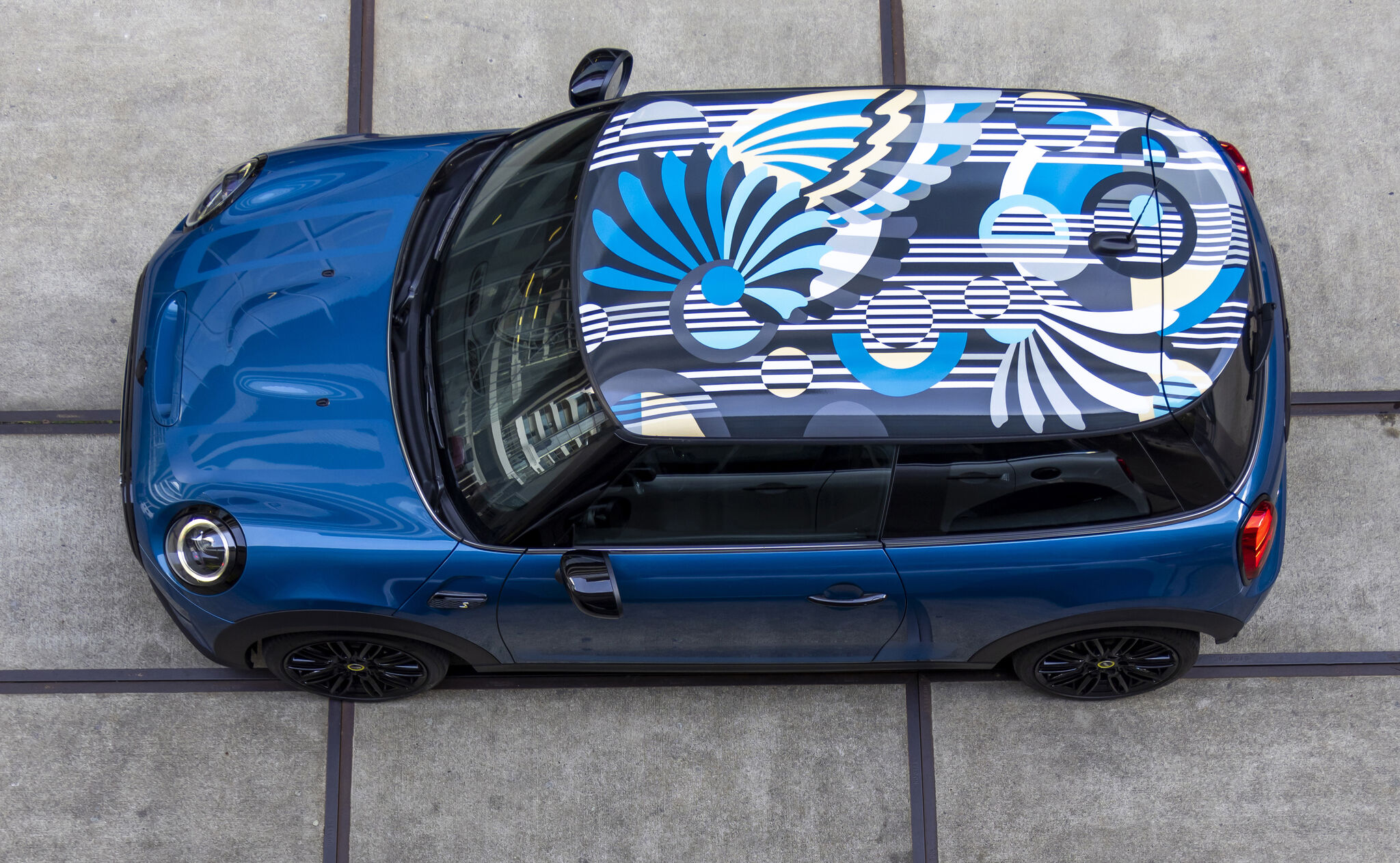
Big Love for MINI
Zebra & Ostrich was selected for a limited-edition rooftop sticker by MINI, perfectly matching their BIG LOVE FOR THE PLANET campaign.
photos MINI © about.today