Human Nature
Human Nature explores the all-encompassing force of evolution and its emotional reciprocity. Woven stories in which the richness of the natural world fluently intertwines with the complexity of human behaviour. Rooted in my fascination with psychological, cultural and societal patterns, I look for the (mytho)logical origins of these behaviours within nature itself. Instinct, desire, and survival become mirrors through which I seek to understand the chaotic path of life as it unfolds.
Through these works, I revisit certain events, emotions and experiences, translating them into broader stories that allow me to process and make peace with what I have lived through. I explore the forces that shape us—our longing for love and light, our vulnerability, our ego, and our tendency to both nurture and destroy. Flowers, insects, snakes, birds and other creatures inhabit these worlds, creating a visual language in which beauty and darkness, fragility and resilience coexist.
Human Nature speaks of a desire for transformation in our present moment: for toxicity to give way to compassion, ego to connection, darkness to light, and fear to love. At its core lies an invitation to contemplate our place within the cosmos. In all our contradictions, we are merely human nature.
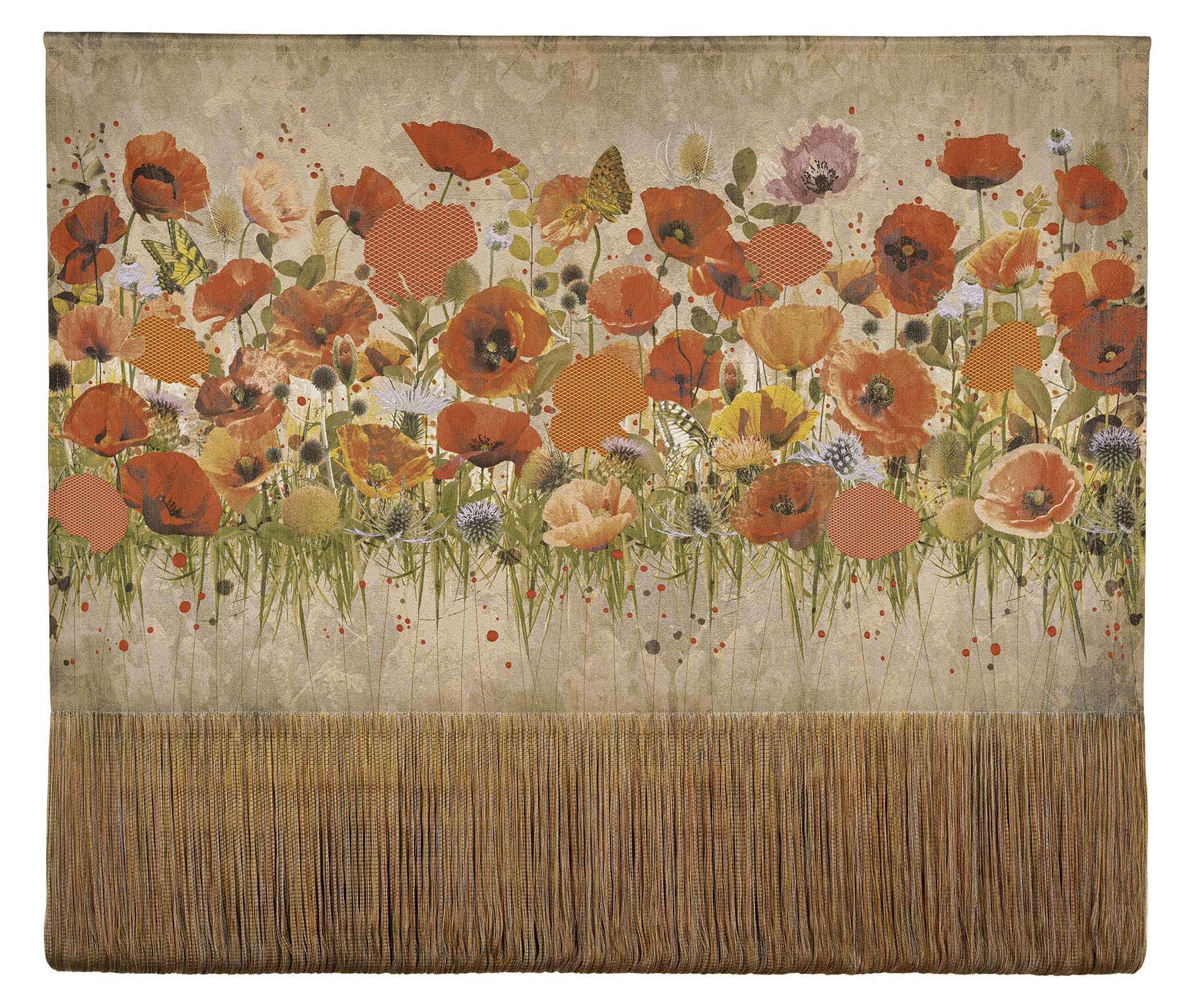
Tall Poppy
when the fear remains to follow
false rivers of stagnant blood,
no flower can rise her shoulders
instead she falls caged within
The pressure to fit within what is considered normal became increasingly apparent to me, along with the discomfort this can create. Being different can make you stand out, but standing out can also make you vulnerable. Often, there is an implicit expectation to remain within certain boundaries—to conform rather than risk being excluded.
The expression “Tall Poppy Syndrome” refers to this tendency. Its origins can be traced back to an ancient story about the Roman king Tarquinius Superbus. When his son asked how to gain control over the city of Gabii, the king silently walked through his garden and cut off the tallest poppies. The message was clear: remove those who stand out, and the rest will follow.
This notion of rising above the surrounding field connects to a broader theme of human distinctiveness. In psychology, a spiky profile refers to an uneven pattern of development, characterised by pronounced strengths alongside areas that develop more slowly.
The fragile poppies, stingy thistles and sharp grasses form figures for these two ideas, creating a landscape of peaks and dips—a visual expression of variation, individuality, and growth.
Tall Poppy is about remaining true to yourself. It raises questions about how much space there really is for individuality within a systematic society that claims to value inclusion and diversity. What makes us different does not need to be cut down; it can be embraced, nurtured, and allowed to grow.
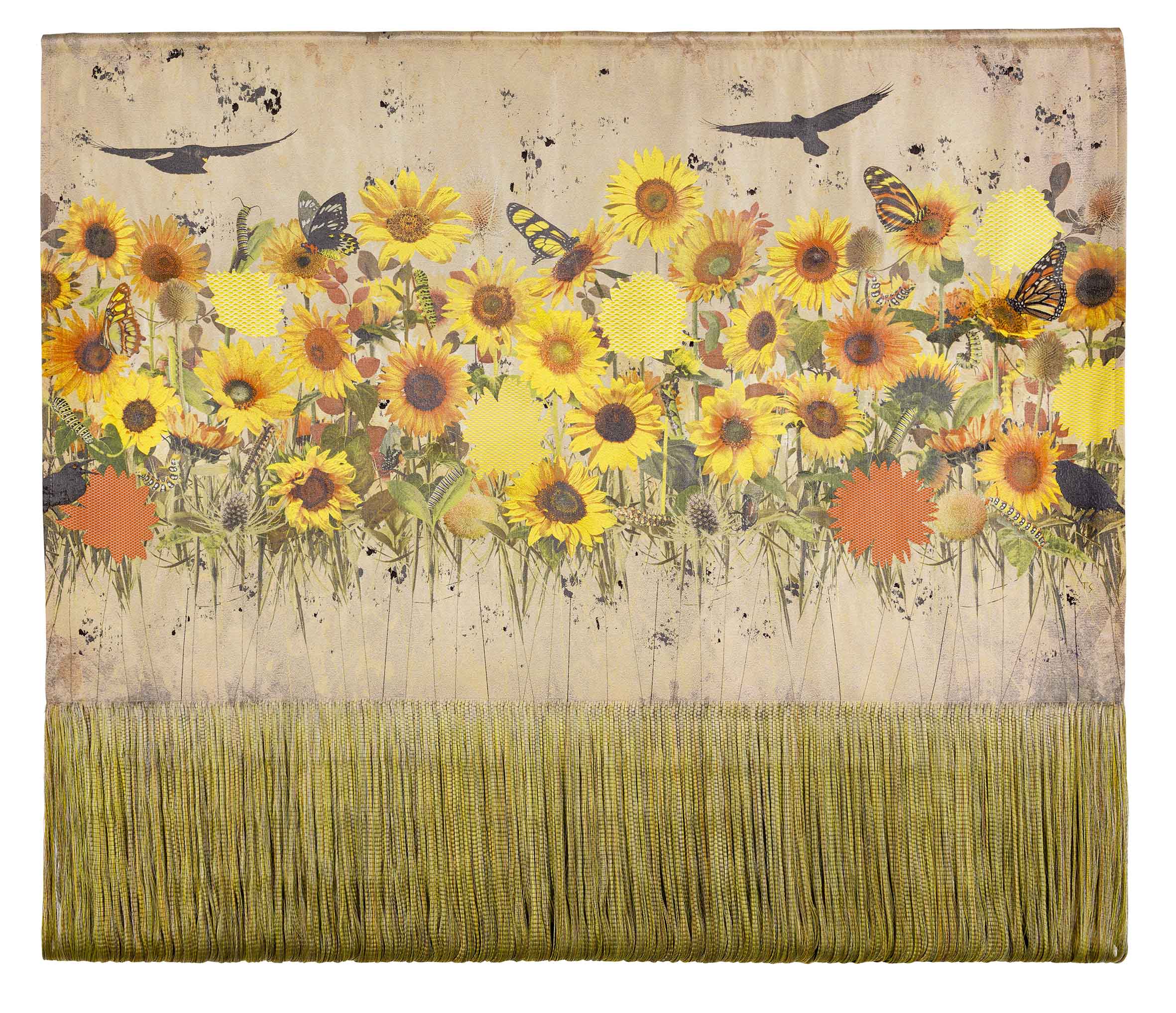
Curious Caterpillar
(and its NeverEnding Search for the Eternal Sun)
a lurking shadow ruffles
on the path of slow impatience,
while the light reflects its wisdom
and is craving to be seen
My urge for stimulation can make me push beyond my limits and lose sight of what I need, creating a cycle of hyperarousal that ultimately makes me my own obstacle. An impulse not only personal; it reflects something larger in the society we live in, where continuous growth, consumption, and stimulation are often encouraged, even as these very impulses can lead us towards collapse.
This paradox between the desire to experience everything and the need for balance is embodied by Psyche, the goddess often depicted with butterfly wings. She must endure the trials of human existence before transformation can take place.
Her destructive side is similar to our Dutch expression “Roet in het eten gooien” (literally, “to throw soot in the food”)—disrupting something that might otherwise have turned out well.
The restless caterpillars become figures for this stage of searching and becoming, navigating a path interrupted by prickly thistles and falling soot. Curious, vulnerable, and not yet free from the cycle of life and death. Together with the lurking crows and bright sunflowers, they form a landscape of opposing forces: darkness and light, attraction and resistance, curiosity and overstimulation.
Curious Caterpillar considers the tension between following our impulses and recognising when they begin to work against us. How do we know when curiosity is leading us forward, and when it is pulling us further away from ourselves?
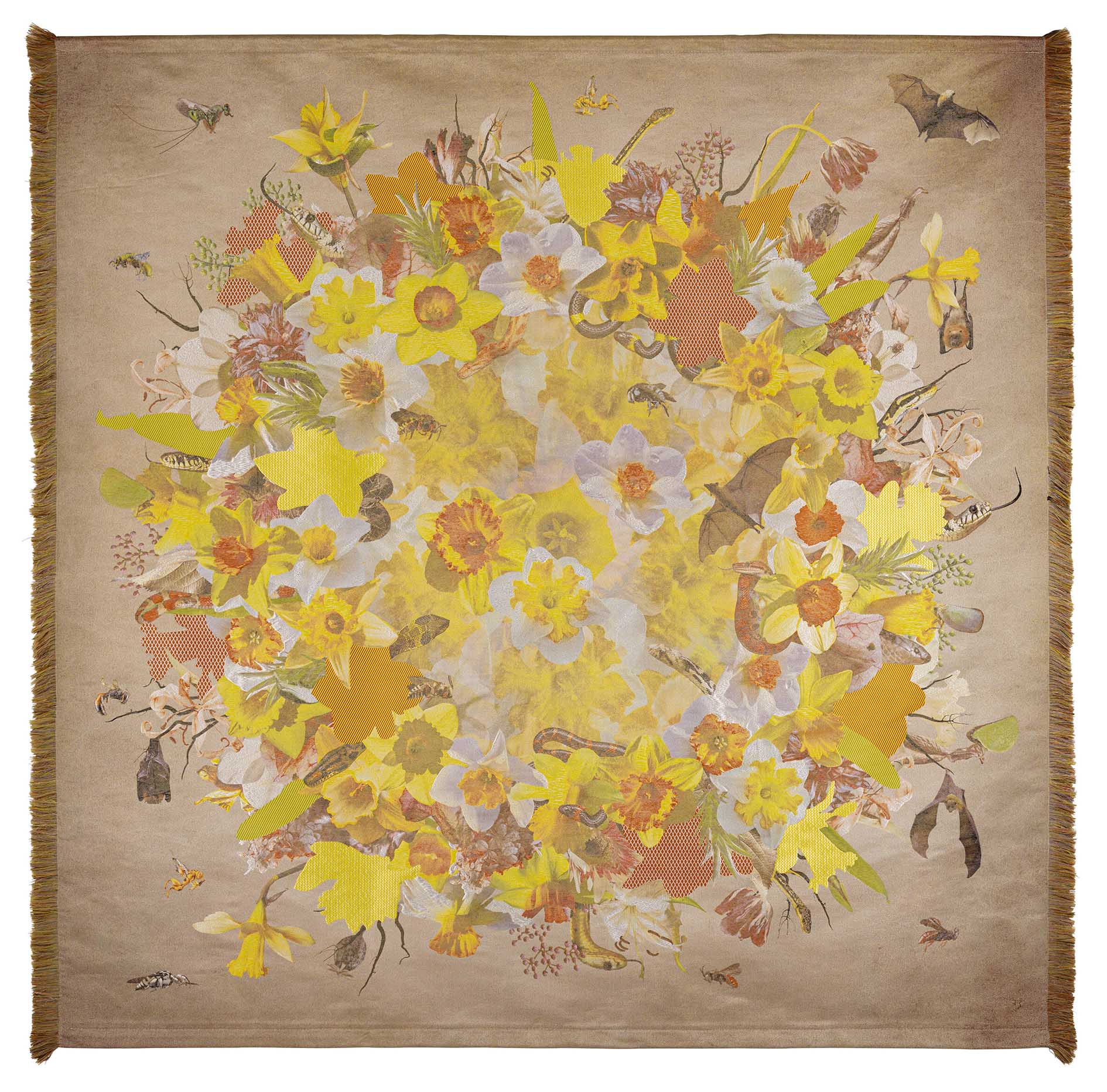
Eye of Narcissus
a false light echoes
below the sea of endless pain,
where the fear plays out the fearful
and the weak are to be blamed
A recurring pattern began to emerge in my encounters—an attraction to people whose self-absorption and desire for control fuelled dynamics marked by imbalance. Perhaps an unhealed wound recognises another, creating interdependencies in which love, care and affection are no longer reciprocal. Echoes of these dynamics can be traced back through the long history of power between men and women.
In the myth of Narcissus, we find a story of love, rejection and the loss of self. He falls in love with his own reflection after rejecting those who love him, while Echo loses her own voice in her longing for him. Their story reveals two sides of the same wound: one consumed by the self, the other losing the self entirely. The remarkable flower, growing where he dies, becomes a small and fragile reminder of what lies beneath.
It is within these unstable relationships—between dependence and autonomy—that the work takes shape. Gleaming narcissus flowers, submissive tulips and parasitic organisms evoke forms of attachment in which one survives at the expense of the other. Yet the intertwined serpents of the myths of Tiresias and Hermes offer another possibility—a glimpse of transformation, balance and peace.
Eye of Narcissus is a reflection on the interplay between love, self-protection and power. It opens a space to recognise genuine connection and to reimagine how we relate to one another and to the world around us—with greater reciprocity, openness and care.
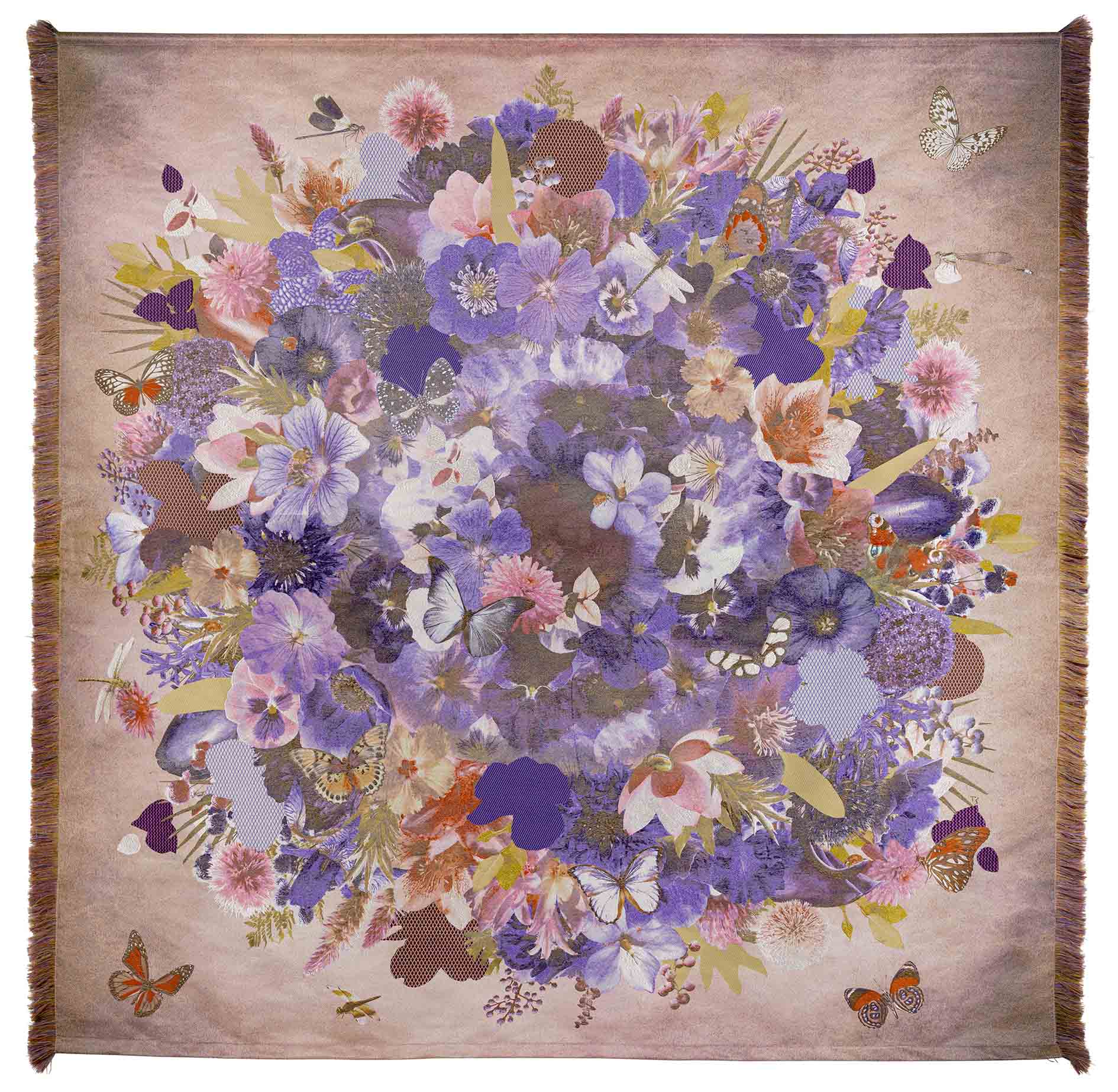
Eye of Aphrodite
when the soil of the earth beneath the sea
is endlessly enriched with compassion and love,
fragile flowers for ever more rise ‘bove ground level
so all butterflies flutter and fly in full swing
Being a woman shaped how my differences were perceived—harder to recognise and harder to understand. A male-centred medical system left me unseen and misdiagnosed. More broadly, many systems have been shaped through a predominantly male perspective, leaving other experiences diminished or overlooked. This work challenges that imbalance and makes space for what has been marginalised.
In this search for balance, I turn to Aphrodite, the Greek goddess of love, beauty, passion and procreation. She was said to have emerged from seafoam created by the severed genitals of Ouranos, the sky god. Born from violence yet becoming a goddess of love and the sea, her story carries a striking tension between destruction and creation, vulnerability and power.
The purple-pink flowers and the freely fluttering creatures embody Aphrodite’s qualities of love and beauty, unfolding into a world of compassion, sensibility and femininity. Violets, often associated with innocence and clarity of the true self, add another layer. Together, they nurture human traits that have often been dismissed as weakness, asking instead what becomes possible when they are deeply recognised.
Eye of Aphrodite encourages us to move towards a society in which masculine and feminine qualities are given equal value and space to evolve—where our differences are not something to overcome, but something to embrace.
About the making process: from digital to tactile
For Human Nature, I selected around 200 images per artwork and then cut out, recoloured, adjusted, and merged elements from these images to create the bursting composition. I then translated the complex, multilayered digital artwork into Jacquard fabric by implementing various weaving techniques, while taking into consideration that the weaving method is built up from only eight colours. The yarns are made from pure new wool, (mercerised) cotton, and NewLife® polyester, and the Jacquard is produced within a sustainable textile production process. For the optional version, I added further 3D effects and a touch of sparkle through hand embroidery and beading.
These works contains (parts of) images made by: Afred Kenneally – Anca Gabriela – Carrie Borden – Cristiano Pedroso Roussado – Danielle Eibrink Jansen – Dulcey Lima – Igor Tudoran – Immo Wegmann – Jeffrey Hamilton – Jerome Farine – Marco de Luca – Paulo Cardoso – Pawel Czerwinski – Steve Douglas – Achim Ruhnau – Aditya Meena – Anna Tsukanova – Ch-p – Rawpixel – Chris Everiss – Christina Dellisante – Darren Richardson – Diana Parkhouse – Eduardo Goody – Farrinni – Feey – Heike Trautmann – Ihor Oinua – James Wainscoat – Jason Leung – Jerry Wang – Johannes Plenio – Joshua Hoehne – Julia Zolotova – Lucas van Oort – Lucy Kral – obv-_design – Margaret Polinder – Monique-d – Nathalie Spehner – Olga Drach – Pierre Best – rui-photography – valentin-hintikka – wolfgang-hasselmann – zel-ribeiro – alexandre-boucey – annie-spratt – bruno-neurath-wilson – christina-deravedisian – daniel-schludi – laura-arellano – margaret-jaszowska – mockup-graphics – visnu-deva – melanie-kreutz – aaron-burden – a-a- – allen-hu – carlos-rodriguez – claudius-virciu – daniel-lloyd -blunk – fernandez – di-maitland – fazil-abi – gidlark – hush-naidoo – jade-photography – jirasin-yossri – dave-hoefler – joshua-j-cotten – kelly-sikkema – kent-banes – lilartsy – lucas – lucas-WhIyc – luka-kirkitadze – marsha-reid – max-andrey – matthias-oberholzer – melanie-kreutz – michael-c- mika-ruusunen – mohsen-bagherzadeh – qu-nh-giang-van – rosalie-baker – sandeep-kumar-yadav – shahir-shah – stephanie-klepacki – tjaako-minnema – vista-wei – wolfgang-hasselmann – annie-spratt – bruno-neurath-wilson-FIy – christina-deravedisian – daniel-schludi – laura-arellano – margaret-jaszowska – mockup-graphics – visnu-deva – amy-baugess – bankim-desai – boris-smokrovic – david-clode – dustin-humes – bill-fairs – danilo-batista – haci-elmas – imagen-station-WMlFl – jiri-plisti – joshua-j-cotten – sahil-muhammed – sandy-millar – william-warby – cristina-glebova – kelvin-ball – krzysztof-kowalik – steve-harvey – maxwell-ingham – aj-joy – erik-karits – joshua-j-cotten – suzanne-d-williams – jeffrey-hamilton – susan-wilkinson – leonardo-yip – paul-moody – Marcel vD – Jong Myung Lim – barbara-kosulin – Heidi Samuelson – Charles Gao – Katelyn Greer – Haley Owens – Markus Winkler – Anton Maksimov 5642.su – Anna Meshkov – Brett Jordan – Brittney Watson – Jenny Thalheim – Yoksel Zok – Ginger Jordan – Henryk Piela – Christopher Paul High – Andriyko Podilnyk – Henry Lai – Jason Leung – Yousef Salhamoud – Jenny Thalheim – Kier in Sight Archives – Natalie Kinnear – Natalia Gusakova – Catrin Ellis – 2happy – Public Domain – Pixabay – Wikimedia Commons – Flickr – Mustang Joe – Bernard Spragg – Tjitske Storm – Filio – Silberfuchs- Harald Landraths – Ftanuki – Marta Wroblewska – Neeraja Shaji – Jong Myung Lim – Pixel 2013 – annie-spratt – chandler-cruttenden – Dave Newbould – daniele-levis-pelusi – elisa – evie-shaffer – public domain spring – claude05alleva – Hermann – congerdesign – ShenandoahNPS – 8926 – cocoparisienne – Free public domain – imagenavir – Fleur – Peggy_Marco – Hans – LoggaWiggler – irina-iriser – kazuend – krzysztof-niewolny – michael-rodock – Hippopx – Didier Descouens – Thawats – alslutsky – globares – viselchak – Hintau_Aliaksey – ProductionPerig – yoksel-zok – Hintau Aliaksei – irin-k – Mikhail Melnikov – Ambient Ideas – 8kka-ame – Cimi – jeffrey-hamilton – kristina-kutlesa – patty-zavala – jeff-kingma – kara-eads – agata-create – bradley-howington – david-clode – erda-estremera – Rawpixel – michael-dziedzic – Subbotina – olga_dobryanska – Lukas Gojda – nikhita-singhal – Teddy – cheli-scott – many unknown global artists from the open-source platforms Rawpixel and Unsplash.
Thanks to all these generous people! And thanks to nature, the main source of all.